

Pest Control News

We invite you to learn more about Palmetto and Pests in the news by following our blog. Please feel free to comment on our posts. Of course, if you have questions, please Contact Us or Ask The Expert. Enjoy our pest control news!

Money, Money, Money!

Did you know that Palmetto Exterminators has an awesome Referral Program for both new and existing customers? It’s easy! All you have to do is print the Referral Card from our website or ask your technician or salesman for a Referral Card. Then write your name and address on the top portion of the card and give it to your friend or neighbor. When they buy ANY Palmetto service such as a Termite Agreement or Pest Control Service, the Referral Card acts as an automatic discount card for them and you get 10% of the sale back in cash. We will send you a check right away!  The really awesome part is that there is no limit to the amount of Referral Cards you give out or the amount of cash you get back. You could get enough cash back to pay for your services or even more! So come on, share us with your friends today!

Is this an Albino Roach?

Molted American Cockroach

Is this an albino roach?


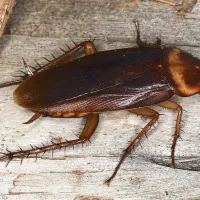
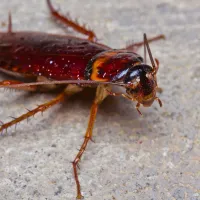
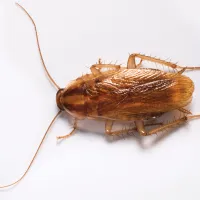
No, this is not an albino roach. In fact there is no such thing as an albino roach.   This ”white roach” is actually a newly molted American Cockroach. When an insect molts it comes out white and stays white until the new exoskeleton has time to harden. An American Cockroach, commonly called a “Palmetto Bug,” goes through 10-13 molts in their two year lifespan. It takes just a few hours for the roach to turn brown and harden again.


Molted American Cockroach Molted albino roach and "Palmetto Bug"

Q and A with Bert The Bug Man

MEET BERT SNYDER

PALMETTO EXTERMINATOR’S GRADUATE ENTOMOLOGIST AND RESIDENT “BUG EXPERT”


 Bert Snyder Graduate Entomologist           Bert Snyder, Vice-President of Palmetto Exterminators, was fascinated by all things bugs from a very young age. Bert’s father, Bud Snyder, spent over 50 years in the termite and pest control industry and instilled in Bert a love of the science of insects. Bert graduated from Clemson University in 1990 with a degree in Entomology, which is “the study of bugs.” He has been working at Palmetto Exterminators since graduating from Clemson. We sat down with Bert in an informal interview so that Palmetto’s customers and prospective customers can learn a little more about Bert and his experiences with bugs. This will be the first in a series of blogs that will educate the consumer about insects and what to look for when choosing a termite and pest control company.


           What is your first memory of bugs?

I believe it was on a camping trip and my dad collecting and showing me different types of bugs at our campground.


            When did you decide you wanted to be an entomologist when you grew up?

It was always in the back of my mind but I did not make the final decision until my Junior Year at Clemson at which time I changed my major from Electrical Engineering to Entomology.


            What is your favorite memory of studying entomology at Clemson?

The students and staff in the Entomology Department -the people working, doing research, and teaching in this field love nature and are truly passionate about what they do and enjoying teaching others.


            Is working in the termite and pest control industry what you thought it would be?

No, working in the termite and pest control industry is not all about spraying chemicals and killing bugs.  This industry involves educating people whether we are educating employees or customers about the pest world and how the life cycle of pests and humans are connected.  The insect world is something most people know very little about and they do not understand how technical this industry really is.


            Why is it an advantage for a termite and pest control company to have an entomologist working for the company?

Having an entomologist on staff gives a company the ability to be confident with knowledge and gives the company’s employees a base understanding of insects that you can build on with everyday experiences.  There are a lot of people in the pest control industry who are not very well trained or educated.  A company that has a person on staff with a degree in Entomology sets the company apart from the rest of the industry.


            What is the most common “bug complaint” that you hear from customers?

It is not about any one particular bug.  Being in the south it is more “Wow, there are a lot of bugs here.”


            How has the termite and pest control industry changed in the last twenty years?

The actual services we perform for our customers have not really changed in the last twenty years. However, we are seeing big changes in the technology available for us to use, which enables us to inspect, communicate, educate, and document our findings better and of course, kill bugs more effectively!  Customers should always be wary because some people use technology to misinform the consumer.


            What is the craziest insect infestation you have seen in your years in the industry?

At a newly constructed elementary school we were called in to treat for black widow spiders.  As we treated hundreds of black widow spiders were flushed out of the cracks and crevices.  It looked like something out of a horror movie.  I was very surprised that children had not been stung more at the school prior to our treatment.


            What is the biggest misconception the consumer has about the termite and pest control industry?

That all companies are the same.  Unfortunately it is relatively easy for an individual to pass the licensing tests and start their own business with very little experience.  Companies are just not the same – most companies do not have an Entomologist on staff; most companies have not been around for more than 50 years. Consumers need to do their research and ask the hard questions. Read the contracts – compare the coverage. Keep in mind that about 90% of existing pest control companies are very small and operate out of an individual’s home with no real office, staff or knowledge.


            Bed bugs have made a resurgence recently and are certainly talked about a lot in the media, what do see as the next big bug story?

There is a ground swell developing in our industry with the ever expanding and growing Formosan Subterranean Termite populations in the U. S.  More and more consumers are saying, “If I had only known” after experiencing an extensive Formosan infestation with serious and expensive damage.

Stay tuned for more conversations with Palmetto Exterminators’ own “Bert The Bug Man.”

Lowcountry Business Circle

Palmetto Exterminators – Bluffton / Hilton Head Area – has been a proud member of the Lowcounty Business Circle (LBC) since 2009. Lowcountry Business Circle is an organization that connects quality businesses to local interested customers. LBC has a great website that allows customers to search for local businesses in all industries from Painters to Restaurants and Exterminators to Doctors. When using LBC, customers can be sure they will find a company with the highest standards and quality. More than just a directory the LBC website facilitates dialog between the company and its customers with easy to find reviews, videos, and relevant company information.

Like Palmetto Exterminators, Lowcounty Business Circle is commited community to our community. They are members of the Bluffton/Hilton Head Chamber of Commerce, work closely with the Home Builders Association, support local charities and they partake in many local events. In fact, through LBC, Palmetto Mosquito Control, the sister company of Palmetto Exterminators, has become a proud sponsor of the Bluffton Farmers Market.

 Keep an eye out because Lowcountry Business Circle is expanding into the Charleston area as well. Check their Facebook page for updates. We urge you to visit the LBC website, look around and please, leave us a review!

Termites Barking Up The Wrong Tree

Palmetto Exterminators and Termidor Team Up To Save Trees From Termites


                 (Charleston, SC) – Silently and secretly, termites do more damage to American homes every year than fire, floods and all other natural disasters combined. Termites infest an estimated 1.5 millionU.S.homes each year and cause nearly $5 billion in damage. In fact, Formosan Termites cost Charleston residents tens of millions of dollars a year in damage, repair and control costs. The Formosan Termite became established in the Charleston Area in the mid 1950’s.  It is now the dominant Subterranean Termite species on the coast of South Carolina.  Due to the increase in rain fall over the past 3 years the Formosan population has exploded. Formosan Termites infest live trees and recent heavy rains have caused the Formosans to move up into the trees in order to escape the saturated soil. In Charleston alone, Formosan Termites have been found in 17 different tree species.

                Representatives from Palmetto Exterminators and BASF, the manufacturer of Termidor, came together to protect and save historic trees on the Charleston Peninsula that were infested with termites. Several Live Oak trees on the Charleston Peninsula were inspected and treated for Formosan Termite infestations.  Palmetto Exterminators and BASF filmed the treatment to use as a training video for pest professionals to educate them about treating trees for termites. Palmetto Exterminators agreed to host the event to educate Charleston’s citizens about the destructive power of termites not only in their homes, but also in their trees. “Treating a termite-infested tree not only saves a tree, but also reduces the overall Formosan Termite population around homes and buildings” says Palmetto’s Graduate Entomologist Bert Snyder.

Click on the links below to read the press on this event in local and national media.

Termite Takeover – Post and Courier, Charleston, SC

Out On A Limb – PCT Magazine

Drought, Snakes, and Bears, oh my!

Drought Conditions May Result in More Snake Encounters

When we think of drought conditions, we tend to think about conserving water, regimented watering schedules and wild fires. It is not often that we think about snakes, especially those of us who are bothered by them. However, with the entire state in a drought status – 26 counties are in a “Moderate Drought” status according to South Carolina State Climatology Office – there may be increased human encounters with snakes.

Snakes have the ability to go a long period of time without food or water. Still, the rainfall levels throughout the entire state of South Carolina have been below average since May 1, 2011. As the drought continues, snakes will forage for water in an increasing degree. All types of snakes, not just aquatic ones, will move beyond their natural domain in search of hydration. Therefore you may be more likely to encounter a snake this summer.

Apparently it is not just the reptiles that are traveling in search of food and water, bears sightings have increased across the state as well, even in such places as the Lowcountry. We at Palmetto cannot help you with the bears and although our pest control service does not specifically include snakes, we have observed that our Quarterly Pest Control customers tend to have fewer problems with snakes around their homes.

For more information visit these sources:

CarolinaLive – Snake Story

The State – Drought brings out bears

Post and Courier - Bear sightings increase 

Post and Courier – Drought has bears roaming

Technician Positions Available

Interested in working for a family owned and operated company that has been protecting people’s health, property and environment for over 50 years?

Palmetto Exterminators has openings for Professional Technicians to assist with termite, pest and mosquito control in our Greenville and Bluffton offices. No experience necessary – extensive training provided. Salary and Benefits are highly competitive. This is a fantastic opportunity for someone who enjoys working outdoors. Apply online here or fax your resume: Greenville 864-848-9036, Bluffton 843-645-9551.

We look forward to welcoming you into the Palmetto Exterminators family.

Honeybee Atop of A Sunflower

PCT Photo Contest Winner Pest Control Technology magazine announces the winner of the 8th annual Best Pest Photo Contest: Timothy Joner, Office Manager of Palmetto Exterminators, Greenville, S.C.

Joner takes top honors (and a cash prize of $500) for his up-close photo of a honey bee (Apis mellifera) atop of a sunflower which one judge describes as having the 3 Cs for winning: color, clarity and composition. “Even the dollops of pollen are visible on the bee.”

On a trip to his mother’s house in Northern Greenville County South Carolina, Joner stopped off at a field and encountered a group of bees that were “having a field day” with sunflower plants. The picture was taken by a Nikon D80 with a Tamron 90 mllimeter macro lens.

“I like the fact the picture actually tells all the details of the bee, all the way down to its hairs. I also like the contrast between the black and yellow, and that the photo shows the bee in its natural environment, it shows what they are seeing,” Joner said.

Joner, who has worked for Palmetto Exterminators the past four years, does photography as a hobby and has photographed other insects such as wasps, butterflies, termites and fire ants. “Since joining Palmetto Exterminators in August 2005, I developed a love for photographing insects,” he said. ”Capturing bugs and pests in their natural habitats provides a great entomology training tool for our technicians and provides an educational opportunity for our customers.”

PCT received more than 50 entries in this year’s contest.

To see more of Timothy’s photos click on the link to the Post and Courier article below:

Post and Courier – Catching Photo Bug

Termites Take a Bite Out of Daniel Island, SC


It is that time of year again, Termite Swarm Season, and our office phones are ringing off the hook. We thought it the perfect time to remind people about this article and the importance of having a Termite Agreement on your house.

Termites Take a Bite Out of DI

By Elizabeth Bush
From The Daniel Island News
Jun 23, 2010

Daniel Island residents Dick and Susan Pruet weren’t sure what to think when they spotted a little ripple in their hardwood floors last January. Initially, water damage seemed the likely culprit, so they contacted a local home inspector to help them find the source.

“He was looking for water leaks, but couldn’t find any,” recalled Dick. “So we moved a table and (accidentally) popped one of the floor boards. And there they were.”

The Pruets starred down in disbelief at an active Formosan Termite colony enjoying a hardwood buffet inside their dining room floor. Unfortunately, the Pruets are just two of many residents on Daniel Island, and in the greater Charleston area, who have discovered hidden termites inside the walls and floors of their homes in recent months and years, and the problem is getting worse.

“We’re gonna be seeing a whole lot more of this,” said Bert Snyder, vice president of Palmetto Exterminators, a pest control company that works with homeowners to keep pesky insects at bay. “It’s dramatically on the increase…and more and more people are having massive damage claims.”

It’s easy to bug-out a little when you spend time with Snyder. The Clemson-educated graduate entomologist, who owns and operates Palmetto Exterminators with his brother, Lance, is fascinated by all things creepy and crawly. And his office in West Ashley is quite literally living proof.

Visitors to Snyder’s corporate abode will find it looks more like a biology lab complete with microscopes, petri dishes, jars of larvae (his Formosan queen is quite impressive), and colorful framed butterfly displays. Like a child proudly showing off a class project, Snyder is happy to pluck one of his squirming Madagascar Cockroaches from inside a glass container and place it in his hand. He’s also got a scorpion, snake, and a couple hundred live Palmetto Bugs to take a gander at as well. But when talk shifts to Formosan Termites, brought to the Charleston area from the Orient via port terminals in the 1950’s, Snyder is all business.

“Up until the mid 1980’s, we knew pretty much by street where we had activity,” he said. “Downtown, Hampton Park area, the port, Charlestowne Landing, Orange Grove Road…(Now), there’s just massive activity going on all over the place.”

Daniel Island termites right at home

On Daniel Island, Snyder said termite activity is particularly troublesome. In fact, he theorizes that there could be some 10 to 20 termite colonies per acre on the island. It’s a problem Snyder traces back to the island’s pre-development days, when termite populations could feast unchecked on downed trees in the wake of tropical storm damage caused by events like Hurricane Hugo.

“We started building houses right up on top of all these colonies,” he said. “And with active Formosan Termites in the live oak trees, these nice beautiful trees with carton nests right inside of them, with those root systems under ground that termites like to follow, now you just set yourself up for a tremendous amount of termite activity popping up in houses.”

Snyder recalls spotting early termite activity on the island when Palmetto Exterminator crews began conducting pre-treatments of wood and soil on new homes under construction.

“Even before we could get to the treatments on the houses, we were finding (termite) tubing up the foundation walls during the construction process. Termites were infesting construction materials sitting out in the yard, sitting on the ground! So we immediately knew we were going to have to change our way of thinking with the Formosan, particularly on Daniel Island.”

While another species, the Eastern Subterranean Termite can also be found in the Charleston area, the Formosans are known for being the most aggressive and most damaging to structures. A trained exterminator will look for small tubes extending from the ground up towards the structure on foundation walls, as well as conditions conducive to termite activity such as moisture and wood rot.

“When we train our guys, we tell them you’ve got to think like a termite,” said Snyder. “You’ve got to be analytical in looking at these properties. Sometimes you just think ‘something is just not right here’ and you’ve got to have a little intuition.”

How will homeowners know if termites are near?

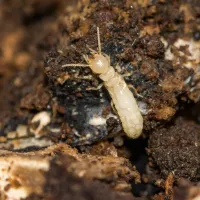
“A lot of times, all people see is a tiny hole in the wall where termites are coming out, where swarmers are coming out right through the sheetrock,” added Snyder, of the tiny honey-colored Formosan ‘scouts’ that swarm in May looking for food or places to begin new colonies. “…If you’ve got (Formosan) termites coming out of the wall, you’ve got to cut the sheetrock off, because you’ve probably got a nest right behind the wall or in close proximity, and you’ll never control them until you pull that out.”

But Snyder also pointed out that the presence of swarmers inside the home is not necessarily cause for alarm.

“Most of the calls we get are people finding these inside their houses crawling around. You may see 10, 20 or 100, but if you’ve got several hundred of them inside your house with wings, there is a potential of a problem somewhere in that house. Sometimes it’s like finding a needle in a haystack.”

About a year ago, Daniel Island resident Susan Orick and her family noticed some cracks in the sheetrock in the room over their detached garage.

“We also noticed that our floor had started to sag, and we could see the floor separating from the shoe molding,” said Susan.

When their contractor indicated that normal “settling” may not be the cause, they had part of the wall and ceiling torn out to get an inside look.

“As soon as they pulled it out you could see the amount of damage,” she recalled of the termite colony found in her walls and floor. “It was unbelievable that these little guys could do so much damage.”

Termite warranties offer protection for homeowners

Fortunately, both the Oricks and the Pruets had complete termite warranties issued by Palmetto Exterminators, who took care of all repairs at no cost to either family. A number of area exterminator companies offer similar coverage for homeowners, but Snyder said you must be careful to read the fine print in their policies.

“You better make sure you verify what the limitations and terms of those agreements and warranties are before you purchase it.”

In some cases, companies do not cover Formosan damage.

“The Formosan is the dominant species of termite in the tri-county area,” he said. “About 90 percent of all termite infestations we are seeing are from the Formosan…If you are not controlling the Formosan in your warranty program, or you have an exclusion, you really shouldn’t be in the termite business.”

Snyder also points out that it’s not a question of “if” a home will be impacted by termites, it’s “when.” Protecting your home must be a long-term commitment, he said. Exterminator companies should come back each year to do a full inspection on the property and treat as needed, including a “booster” treatment every seven years.

“It’s not an exact science,” he added. “It’s more of an art. It’s a process. It’s not a one-time event. It’s maintenance. And it’s a relationship we build with a homeowner.”

A yearly renewal for a termite warranty is typically between $200 and $300. When you consider the cost of home insurance, which doesn’t cover termite damage, it’s money well spent, Snyder added.

“You are several times more likely to have termite damage to your structure than you are to have damage from hurricanes, fires, or storms of some sort. And people don’t realize that.”

“Keep your termite bond in place, up to date, and current,” said Dick Pruet, whose Center Park home was treated and repaired for termite damage within a few weeks. “If you’re without a termite bond, you’re not being smart…You’ve got too much of an investment in these houses not to have it…If you see something that’s not quite right, it’s probably not right. With termites, you have to assume the worst.”

Palmetto Mosquito Control Joins Extreme Makeover: Home Edition

Keeping the Dickinson Family Mosquito and Gnat Free!

(Beaufort, SC) – Extreme Makeover Home Edition visits a Beaufort family and Palmetto Mosquito Control helps out! The family friendly show which airs on ABC Sundays 8/7C, is known for building extravagant, no detail left behind homes and the local Beaufort home is no exception. In fact, it is complete with a Residential Mosquito Misting System and one year’s worth of service provided by Palmetto Mosquito Control.

While the house was built and the show was filmed in 7 days, due to uncharacteristically cold weather, some details were left until after the cameras stopped rolling, including the installation of a residential misting system manufactured by Coastal Mosquito. While Palmetto’s technicians were at the house outfitting the new yard and outdoor living area, they were warmly greeted by the Dickinson family. Palmetto explained to the family that the new Mosquito Misting System, will automatically spray twice a day, morning and night when mosquito pressure is the worst. In addition India Dickinson, the mother, was given a remote control so she can mist the area anytime the family needs a little extra protection from biting mosquitoes and gnats.

Palmetto Mosquito Control is proud to be a part of Extreme Makeover Home Edition and the beautiful Dickinson Family home. “It was an honor to meet the family, speak with them and know we were allowing them to fully enjoy all of the outdoor features of the home without pesky mosquitoes and gnats,” said Mike Trezza, the Manager of Palmetto Mosquito Control in Bluffton.

Palmetto Mosquito Control has been in business since 2003. It was one of the first companies to offer Outdoor Residential Misting Systems and full mosquito programs. It is the sister company of Palmetto Exterminators, a family owned and operated business that has been protecting people’s health, their property and the environment since 1960. With eight locations serving customers in South Carolina, North Carolina and Georgia and two graduate Entomologists on staff, Palmetto Exterminators strives to lead the industry in innovation. For more information regarding Palmetto’s initiative please visit www.palmettoexterminators.net or www.palmettomosquitocontrol.com.

7 Locations serving South Carolina, North Carolina & Georgia

Charleston, South Carolina
1.800/585.8019
843/766.9701

Columbia, South Carolina
803/254.5833

Summerville, South Carolina
843/873-7997

Greenville, South Carolina
1.888/293.3377
864/233.3377

Beaufort, South Carolina
843/522.0020

Charlotte, North Carolina
704/882.0641

Walterboro, South Carolina
1.800/334.5122
843/549.1531

Palmetto Mosquito Control
Charleston: 843/766.9701
Hilton Head: 843/785.2399