
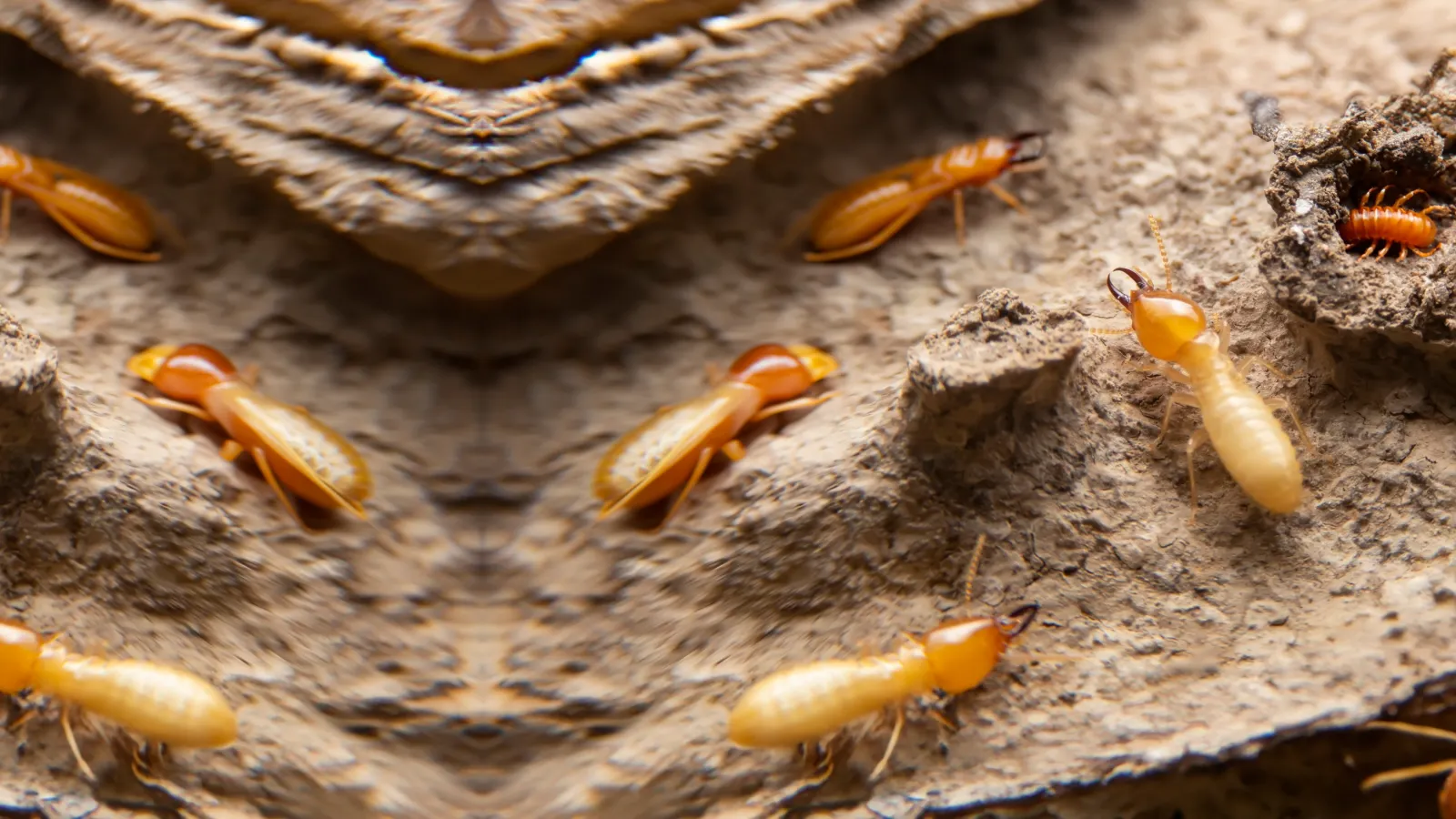
Formosan Termites
Latin Name: Coptotermes formosanus
Formosan termites are very picky about the weather. The main reasons you see them so frequently during May and June come down to these factors:
Colony: Formosans live in large colonies that can contain millions of termites. These colonies can be found underground, within structures, or in aerial nests. Unlike Eastern subterranean termites that fly during the day, Formosan termites are completely nocturnal.
Destructive Behavior: Formosan termites are known for their aggressive and destructive feeding habits. They consume wood and cellulose materials found in structures, including buildings, trees, utility poles, and wooden furniture. Their rapid feeding can cause significant damage in a short amount of time.
Moisture Dependence: Like other subterranean termites, Formosan termites require moisture to survive. They often build mud tubes to travel above ground and maintain contact with moisture sources —especially on evenings right after a heavy rain.
Swarming Behavior: Formosan termites reproduce through swarms, typically during warm and humid evenings when night temperatures stay in the 70s. Swarms consist of winged reproductive termites, which mate and establish new colonies.
Geographical Preference: They wait until dusk to come out of their nests, and they are intensely attracted to artificial light. This is why you see them everywhere during these months. They will crowd around streetlights, porch lights, illuminated windows, and even stadium lights at baseball games.
Control and Prevention: Controlling Formosan termite infestations can be challenging due to their aggressive nature and large colony sizes. Swarmers do not have the mouthparts to chew on your house.
Their only job is to find a mate, drop their wings, and search for a damp spot to start a brand new colony.
Overall, Formosan termites pose a significant threat to structures and wooden materials, requiring proactive management and control efforts to minimize damage and protect properties.
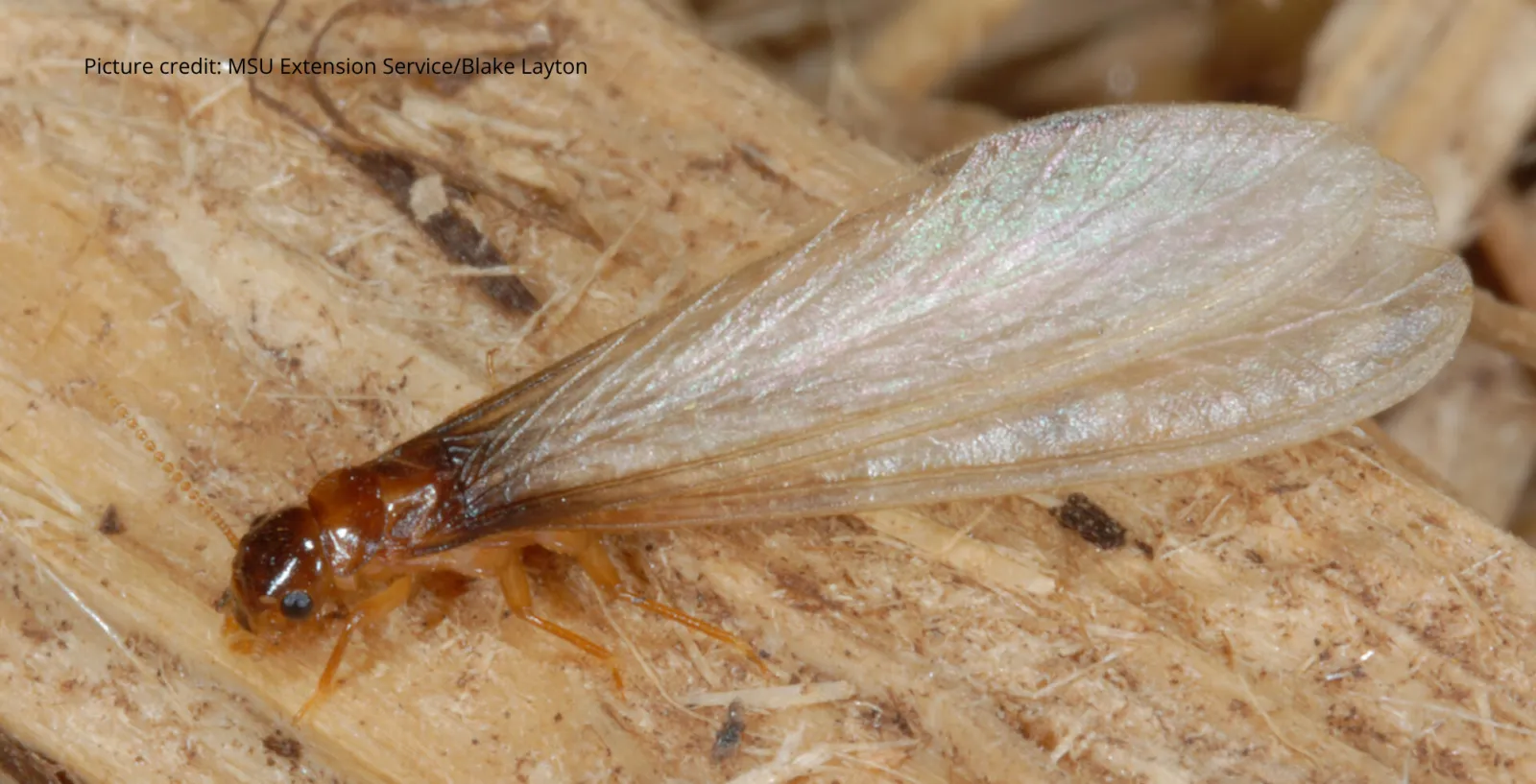
Similar Pests: Drywood Termites, Eastern Subterranean Termite